

Projects financed 2023/2024
Index of project titles
- Canola agricultural economists
- Evaluation of shortened canola production periods and the use of alternative crops on the sustainability of winter grain production under conservation agricultural practices in the Riversdale Flats
- Projected protein requirements for animal consumption in South Africa
- Income and cost budgets for summer and winter crops in South Africa
- Data-Intensive Farm Management (DIFM) project in South Africa
- Establishing the climatic factors for maximum canola yield (genetic yield potential) and modelling canola yield and spatial suitability under present and future climate conditions in the Western Cape
- Is additional Nitrogen beneficial to soybeans (glycine max. L) in different agro-ecologies of the Eastern Highveld?
- Canola (Brassica napus L.) plant population and cultivar effects on weeds in the Western Cape, South Africa
- PRF website
-
Canola agricultural economists
The Canola Agricultural Economists and BFAP discussions regarding the Income and Cost Budgets for the winter rainfall area are scheduled every second year.
-
Evaluation of shortened canola production periods and the use of alternative crops on the sustainability of winter grain production under conservation agricultural practices in the Riversdale Flats
Objective
The aim of this study is to determine the short- and long-term effects of six of the most feasible crop rotation systems identified for the high potential soil of the Riversdale area on:
- Crop yields
- Weed control
- Disease suppression
- Soil production potential
- Economically sustainable land-use in the Riversdale area
Motivation and project description
- Reduced input costs for wheat production
- Increased protein and oil seed production
- Increased diversification of the farming system for greater financial stability
- Increased production potential of soils due to increased organic matter content, and micro-and macro-organism activity
- Less compaction of high potential soil from animal movement
The new Riversdale project will use the existing 15 large plots being used in the current trial that is part of the previous extended southern Cape crop rotation trial. The 15 plots will be split into 4 to provide a total of 60 plots to provide enough small plots to plant the different rotations, which will be replicated 3 times with all crops present each season.
New systems tested
- Legume crop - Wheat - Canola - Wheat (4 year system as control) – 50% small grain, 25% canola, 25% legume crop
- Canola - Wheat - Canola - Wheat (2 year repeating system) – 50% small grain, 50% canola
- Canola - Barley - Legume crop - Wheat - Wheat (5 year system) – 60% small grain, 20% canola, 20% legume crop
- Wheat - Barley - Canola (3 year repeating system) – 67% small grain, 33% canola
- Wheat - Wheat - Green manure cover crop (3 year pure grain system) – 100% grain (oats can be used as smother crop/green manure if needed)
- Green manure cover crop - Wheat - Canola (3 year system with an alternative broadleaf cash crop) – 33% grain, 67% broadleaf
Funding institutions
This application will be sent to both the Protein Research Foundation (PRF) and SAWCIT. The budget will be split: 50% PRF and 50% SAWCIT.
The Western Cape Department of Agriculture provides all manpower and facilities required for successful implementation of the trial.
This long-term project will be entering its 12th year in 2023 and has a 12 year planning horizon.
Motivation
Problem
Lack of knowledge on the biological and economic sustainability of crop rotation systems for use on high yielding soil in the Riversdale area.
Nature and extent
The economic viability of long-rotation crop/pasture systems has been shown through two 5 year crop rotation trials following lucerne pasture in the Riversdale area (see previous technical reports presented by the Hardy & Strauss on: "Economic sustainability of short- and long-rotation crop/pasture production systems in the southern Cape"). Increased input costs and lower product price as well as variable rainfall have resulted in high economic risk to wheat farmers. Alternative crops and cropping systems have been identified as potentially financially viable alternatives to the traditional wheat monoculture (Smit & van Zyl 1998). The value of these alternative crops including canola (Arkcoll 1998) and lupins (Agenbach undated) has been shown over the past 10 years in numerous reports and talks by the authors.
In Australia, the introduction of ley pastures since the late 40's in wheat cropping areas has successfully restored fertility and improved soil structure such that grain yields have increased (Donald 1964, White et al 1978, Hardy 2010). The relative success of these crop and crop/pasture rotation systems depends on economic conditions as well as environment and farm size (White et al 1978). However, the relative biological and economic benefits of potential crop rotation systems on high yield-potential improved soils can usually be identified only by long-term studies (Elliott & Jardine 1972). These studies allow for examination of the effects and interactions of, for example, reduced use of fungicides and herbicides due to rotation of a broadleaf crop with the cereal crop (Jordan et al 1998).
Of particular importance to emerging farmers and the developing agricultural sectors (but also to commercial farmers) is the concept of reduced input systems (Jordan et al 1998) which involve manipulation and integration of husbandry practices within crop management. Crop rotation is a key component in reduced and integrated systems of production, with maximum use made of crops which contribute positively to soil fertility. Based on data from a five-year "less-intensive strategy" crop rotation experiment, Jordan et al (1998) showed reduced overall yields of wheat and oilseed rape of up to 18%. However, production costs were also reduced by 32% and overall profitability of crop production was maintained. There were substantial reductions in applied nitrogen (36%), herbicides (26%), fungicides (79%) and pesticides (78%) where "low-input" was compared to a conventional production strategy.
Crops such as canola and lupins are ideally suited to rotation with wheat as it is important (from a disease prevention point of view) that neither canola nor lupins are planted on the same land more frequently than every third or fourth year. Not only do they provide suitable broad-leaf "break" crops in which grass weeds may be effectively controlled in wheat production systems, but they also have the potential to improve soil structure (Arkcoll 1998) and, in the case of lupins, provide nitrogen to the following wheat crop.
Crops such as canola and lupins are ideally suited to rotation with wheat as it is important (from a disease prevention point of view) that neither canola nor lupins are planted on the same land more frequently than every third or fourth year. Not only do they provide suitable broad-leaf "break" crops in which grass weeds may be effectively controlled in wheat production systems, but they also have the potential to improve soil structure (Arkcoll 1998) and, in the case of lupins, provide nitrogen to the following wheat crop.
Summary
Aim
The aim of this study is to determine the short- and long-term effects of six of the most feasible crop rotation systems identified for the high potential soil of the Riversdale area on:
- Crop yields
- Weed control
- Disease suppression
- Soil production potential
- Economically sustainable land-use in the Riversdale area
Motivation
- Reduced input costs for wheat production
- Increased protein and oil seed production
- Increased diversification of the farming system for greater financial stability
- Increased production potential of soils due to increased organic matter content, and micro- and macro-organism activity
- Less compaction of high potential soil from animal movement
Key Questions
Short-term
- Production. What is the production potential of wheat, canola and lupins in a specific season when applying the crop production protocols recommended for the area concerned?
- Alternative crops. What are the effects of incorporating crops such as "koljander" on cereal production in the traditional cereal production systems practiced in the southern Cape?
- What is the effect of previous season's crops (wheat, canola, lupins, barley, oats and "koljander") on the quantity and quality of crop production in the following season? How do these effects change over time?
- Economics. Are there any short-term differences in the gross margins attained among the rotation systems being tested?
- Production. Does increased frequency in canola production have an effect on sustainability in terms of disease pressure and economic sustainability?
Potential short-term component studies (should additional research capacity and funding become available):
- Are there differences in soil-borne disease infestations in the same crop among rotation systems?
- Are there differences in soil micro-organism populations among rotation systems?
- How do soil nitrogen dynamics differ among crop rotation treatments?
- What is the effect of crop rotation system on the baking quality characteristics of wheat?
- What is the effect of nematodes on the production of the different crops?
Long-term
- Economics. What is the long-term effect of crop rotations on farm income in the Riversdale "vlaktes"?
- Sustainable production. How do rotation systems influence crop yield and quality over time?
- Alternative crops. What are the long-term effects of incorporating green manure cover crops in crop rotation systems?
- Weed control. How does rotation system influence weed seed-banks over time?
- Sustainability of soils. What influence does crop rotation system have on the maintenance and improvement of the organic carbon content of soils?
- Disease suppression. The occurrence and intensity of diseases over time?
- Reducing inputs. How do input requirements for optimal crop and pasture production change over time for the different rotation systems?
Potential short-term component studies (should additional research capacity and funding become available):
- What are the long-term effects of crop rotation on soil-borne diseases?
- What are the long-term effects of crop rotation on soil micro-organisms?
- What are the long-term effects of crop rotation on soil nitrogen dynamics?
The following nul hypotheses will be tested:
- Long-term (in four year cycles)
- There is no long-term economic benefit to the farming enterprise from applying various crop rotation systems without incorporating pastures on the high potential soil.
- Crop rotation has no significant effect on the quantity, quality or consistency of wheat production in the Riversdale area.
- Crop rotation systems will not improve soil organic matter content when compared to a crop/pasture system.
- Crop rotation systems will not reduce the input (nitrogen fertilizer, herbicides, insecticides and fungicides) requirements for wheat production.
- Short-term (annual)
- The previous season's crop has no effect on the quantity, quality or consistency of wheat production.
- The previous season's crop has no effect on the nitrogen requirements for wheat production.
Summary of experimental design and treatments
The new Riversdale project will use the existing 15 large plots being used in the current trial that is part of the previous extended southern Cape crop rotation trial. The 15 plots will be split into 4 to provide a total of 60 plots to provide enough small plots to plant the different rotations, which will be replicated 3 times with all crops present each season.
New systems tested
- Legume crop - Wheat - Canola - Wheat (4 year system as control) – 50% small grain, 25% canola, 25% legume crop
- Canola - Wheat - Canola - Wheat (2 year repeating system) – 50% smallgrain, 50% canola
- Canola - Barley - Legume crop - Wheat - Wheat (5 year system) – 60% small grain, 20% canola, 20% legume crop
- Wheat - Barley - Canola (3 year repeating system) – 67% small grain, 33% canola
- Wheat - Wheat - Green manure cover crop (3 year pure grain system) – 100% grain (oats can be used as smother crop/green manure crop)
- Green manure cover crop - Wheat - Canola (3 year system with an alternative broadleaf crop) – 33% grain, 67% broadleaf
Treatments: 6 rotation treatments, fully represented each year and replicated 3 times, in a randomised blocks design.
- Camp areas: 0.11 ha
- Total area involved: 9 hectares
- Number of camps planted to various crops each year: 60
- Annual plan of operation
Soils and fertilisation Month Operation January Analyse 60 soil samples (collected in November/December) for microand macro-elements and determine the fertilisation requirements of each camp.
Analyse 60 soils samples to determine organic carbon content of soils in each camp.March to November Take additional soil samples and analyse as necessary to deal with specific soil problems as they become evident during the season March/April Correct any problems associated with soils e.g. drainage and “brak” patches, as necessary. April/May Prepare soils for cropping (minimum tillage procedures) and apply P, K and lime were necessary.
Apply N and P (band placement) as basal dressing at planting.July Apply N top-dressings as required November/December Collect 60 soil samples for fertility analyses (1 composite sample from each camp).
Collect 60 soil samples for organic carbon determinations.Weed seed bank studies Month Operation End March Collect 60 composite top-soil samples - two from each of the camps in the trial.
Prepare samples in seedling trays and place in germination facility.April to September Monitor medic, clover and weeds species germination and emergence at monthly intervals in all 60 seedling trays. October to March Capture data, summarise, analyse and report on findings. Crop management and data collection Month Operation March Determine TKW of seed of all crops to be planted.
Determine germination % of seed.
Use above to ensure correct seeding rate.May Plant all crops, timing depends on climatic conditions. June to October Control weeds, diseases and pests according to requirements and management protocols.
Fertilise according to requirements and management protocols
Monitor diseases in each camp.June/July Do plant counts in each camp to determine plant densities. (10 samples per camp – 600 samples in total). November Do plant counts in stubble of camp after harvesting to obtain estimates of plant survival through season. October Harvest crops using combine harvester, individual camps harvested each season.
Weigh total harvest from each camp in portable weighing bin on each camp (> 60 tons in total depending on the season).
Take samples of grain from each camp for quality determinations (%CP, HLM, "sifsel" %, and baking quality measures)Component research projects (from 2012) Month Operation January to December ECONOMIC ANALYSIS
Record all inputs and output for each camp e.g. time taken for operation, amount of input used, costs of inputs, crop yield and quality, price for product etc.
Enter all data into Gross Margin Analysis program for economic analyses.
Finalise economic analyses for previous year by June and produce hard copy of the results.January to December Rainfall and temperature data: collected continuously using a data logger that is located within the experimental area.
Data are summarised and reported on annually.General management of experiment and reporting Month Operation February Organise and hold meetings of the Riversdale Crop Rotation Technical
Committee to develop management protocols for the crops in each treatment, to solve problems and present results to extension staff, and to view development of the crops each seasonMarch/April Hold planning meetings with co-workers on their component experiments to be conducted within the experimental area. January to December Meet with potential co-workers to design research projects to be conducted within the experimental area aimed at answering specific questions arising as the project progresses.
Daily management and inspection of experimental area by field manager.
Maintain experimental infrastructure (information boards, roads, fences, gates and watering points) and equipment (data loggers, boom sprayers, tractors and implements).
Bi-monthly visits to Riversdale by project leader to view progress, to develop and adjust monitoring procedures, assist with data collection and for quality control.
Accept ad-hoc invitations to present results of crop rotation experiment to local study groups and farmer's association meetings Attend study group and farmer's association meetings to be updated on latest technology relating to crop production in the southern Cape Present results as they become available at scientific symposia and congresses of professional societies.March and September Present management requirements and results of experiment at the Riversdale information day in September. April to June Summarise and analyse all data collected from the previous season.
Prepare and submit a detailed annual report on the activities and results.June and July Prepare annual progress reports for funders (SAWCIT and PRF) and apply for continuation of funding. January to December Prepare talks, as well as popular and scientific publications on the results and implications of the crop rotations being tested. -
Projected protein requirements for animal consumption in South Africa
The report submitted is under consideration.
-
Income and cost budgets for summer and winter crops in South Africa
Background
The Bureau for Food and Agricultural Policy (BFAP), founded in 2004, serves the agro-food, fibre and beverage sectors in South Africa and Africa. Our purpose is to inform better decision-making by providing unique insights gained through rigorous analyses, supported by credible databases, a combination of integrated models and considerable experience. Over more than 15 years, the Bureau has developed a very distinct value proposition to deliver a holistic solution to public sector and private clients active in the agricultural sector and related value chains. This offering is complemented through BFAP's investment in the Integrated Value Information System (IVIS), a geo-spatial platform which further enhances BFAP's product offering by providing enhanced systems solutions to the integration of data and insights visualisation to support strategic decision-making along multi-dimensional value chains.
The BFAP Group consist of a team of experienced private and public sector experts with a range of multi-disciplinary skills including agricultural economics, food science, mathematics and data science, engineering, supply chain management, socioeconomic impact assessment, systems technology, and geo-informatics. In addition, we fundamentally believe that a competitive and thriving agricultural sector with its related value chains is built on long-run partnerships. Hence, BFAP has developed a well-established network of local and international collaborators and partners in the public and private sectors. This includes long-standing partnerships with private sector clients for more than a decade, research partners like the Food and Agricultural Policy Research Institute (FAPRI) at the University of Missouri in the USA and the Food and Agricultural Organization of the United Nations (FAO). BFAP is also one of the founding members and partners of the Regional Network of Agricultural Policy Research Institutes (ReNAPRI) in Eastern and Southern Africa. As a team and as a network, we pool our knowledge and experience to offer the best possible insights and access to a unique high value network.
The BFAP Group utilises globally recognised techniques and modelling systems to analyse the food, fibre and beverage sectors.
The current BFAP modelling system covers more than 50 commodities each supported by:
- In-depth study of agro-resources and input-output markets, production systems and farming business operations, offering the ability to evaluate the competitiveness and sustainability of farming systems.
- End-to-end value chain analysis, tracking product flow, efficiencies, and margins along the chain.
- Commodity markets scenario modelling and forecasting to quantify future outcomes, evaluate risk, identify growth opportunities, and assess impacts of changes in the macroeconomic, business and beverage sectors.
- Analysis of the consumer and retail space to provide insights on food price impacts and food security.
- Credible analysis, monitoring and evaluation of rural and socio-economic development related to the food, fibre and beverage industries.
The extensive integrated database and modelling frameworks enable BFAP to analyse and generate long-run projections and unpack alternative future scenarios for agricultural commodity markets and within the main sub-sectors (grains, livestock, and horticulture).
The BFAP Farm & Production Analytics Division
The program
The BFAP Farm & Production Analytics was established with the main objective to assist agribusinesses and farm businesses with strategic decision-making under changing and uncertain market conditions.
This is done by means of advanced quantitative analyses of how different policy options, macroeconomic variables, and volatile commodity market conditions could impact upon farm businesses in selected production regions in South Africa. The BFAP Farm & Production Analytics Division includes economic analysis of the production of grain, oilseed, livestock, wine, fruit, sugar, and vegetables. Proto-type farms across South Africa's key producing regions are constructed according to a standard operating procedure (SOP) defined by the agri benchmark methodology and are presented in Table 1.
The models and methodology
The farm-level activity of BFAP consists of two key components on which services to individual clients are based. These include the system of linked models between the sector and the FinSim farm-level models and the agri benchmark international network.
Farm-level modelling
The BFAP farm-level model (FinSim) is a total budgeting model capable of simulating a (representative) farm comprising various enterprises, e.g. grain, oilseeds, and livestock. Apart from the enterprise specifics, the model captures business specifics, such as the asset structure and financing method(s). The output of the farm-level model is presented through various financial performance indicators. The BFAP FinSim model is utilised in various ways, which include whole-farm planning (capital and operational expenditure), financial and economic feasibility on farm-level, risk analysis via stochastic simulation, impact of policy decisions, input- and market-related shocks on farm-level, and the intermediate and long-term projection based on the BFAP sector model output.
Table 1: BFAP existing network of prototye farms Summer grains Winter grains Oilseeds Small-scale Sugarcane Potatoes Horticulture Pig network Western Free State: maize Overberg: wheat Eastern Free State: soybeans KwaZulu-Natal: traditional producers KwaZulu-Natal: northern coastal dryland Eastern Free State: dryland Western Cape: apples Western Cape: integrated farm Northern Free State: maize Overberg: barley Eastern Free State: sunflower KwaZulu-Natal: grain development program KwaZulu-Natal: southern coastal dryland Limpopo: irrigation Western Cape: pears KwaZulu-Natal: integrated farm Eastern Free State: maize Northern Cape: wheat Northern Free State: sunflower and cotton KwaZulu-Natal: midlands KwaZulu-Natal: seed Citrus North West: integrated farm Northern Cape: maize Northern Cape: barley North West: sunflower and cotton Mpumalanga: irrigation Sandveld: irrigation Western Cape: table grapes Mpumalanga: maize (budgets) Swartland: wheat, barley and canola (2019) Mpumalanga: soybeans (budgets) KwaZulu-Natal: northern coastal dryland (small-scale) North West: maize Overberg: canola Northern Cape: cotton Limpopo: cotton Agri benchmark
The agri benchmark network is an international network of agricultural research and advisory economists aiming to create a better understanding of global cash crop farming and the economics thereof. The objective of the agri benchmark initiative is to create a national and international database on farm information through collaboration between the public sector, agribusinesses and producer organisations. The link between the local and international network provides the means to benchmark South African agriculture with worldwide farming systems.
More specifically, the national farm information database that is linked to the international information system provides decision makers and stakeholders in South African agriculture with a useful tool to obtain business intelligence information, to obtain updates on local and international agriculture, to make financial and managerial strategies for profitable and sustainable farming, and finally, it provides a platform to compare farming businesses and production systems of 16 cash crop enterprises all over the world. The map below illustrates the major countries and crops in the agri benchmark network.
Figure 1: Agri benchmark cash crop network 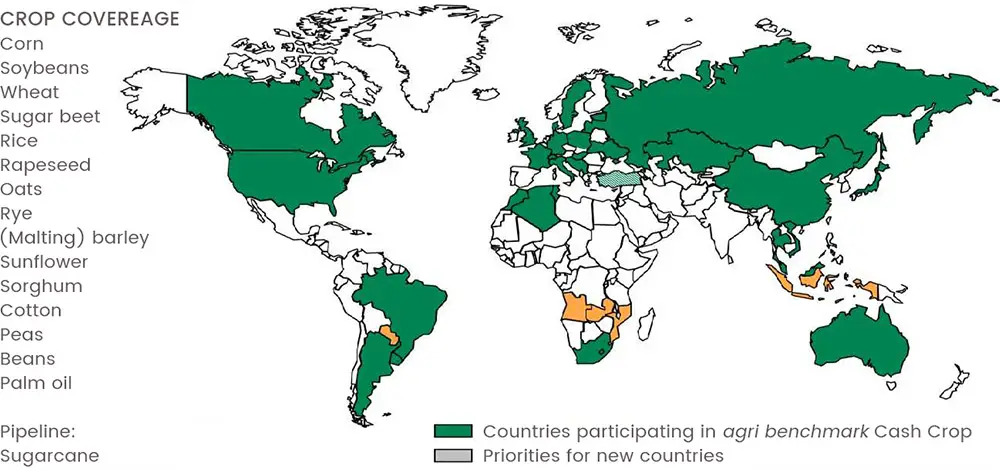
Objectives and key deliverables
The Protein Research Foundation (PRF), Grain South Africa (GSA) and the Bureau for Food and Agricultural Policy (BFAP) historically had their own cost of production efforts which focused on key summer and winter crops produced in South Africa's key agro-ecological zones. Given on-going activities associated with the organisations and the extent of the coverage of South African agricultural production, the PRF, GSA and BFAP together with agribusinesses agreed to collaborate on the compilation of enterprise budgets.
The main objective of this collaboration and project is to consolidate these efforts and generate comprehensive crop income and cost budgets for key summer and winter growing regions and generate sensitivity analysis for these crops. The compilation of these enterprise budgets is underpinned by the latest macroeconomic trends, BFAP sector model underlying assumptions and international and domestic market updates. BFAP together with the PRF, Grain SA, agri businesses and industry experts will continue to engage with the objective to refine model assumptions and to ensure alignment.
Please refer to annexure of this proposal for detailed regions and proposed crops.
Specific objectives
- Generate crop income and cost budgets for key summer grains and oilseeds in selective regions in South Africa: Dryland: Mpumalanga / Eastern Highveld, Eastern Free State, Northern and Western Free State, North West and KwaZulu-Natal. Irrigation: Northern Cape, Brits, Limpopo and Bergville.
- Generate crop income and cost budgets for key winter grains and oilseeds in selective regions in South Africa: Dryland: Eastern Free State, Southern Cape and Western Cape. Irrigation: Northern Cape, Brits, Limpopo and Bergville.
- Generate sensitivity analysis for the above identified crops based on the latest market trends and projections. The identified regions and proposed crop coverage is presented in the annexure of this proposal.
- Generate a bi-annual report on crop budgets for the subsequent season.
Proposed schedule of reports
- February/March – Planning and analysis for subsequent winter crop;
- August/September – Planning and analysis for subsequent summer crop.
Annexure: Regions and crops covered
Figures 2-11 illustrate the existing coverage between the GSA, BFAP and agribusinesses. It is proposed to continue with the below listed regions and crops covered by GSA and BFAP.
Levels definitions
- Level 1: Commodity enterprise budgets: updated annually;
- Level 2: Actual cost of production (historic);
- Level 3: Projections / Quarterly Updates.
Figure 2: Mpumalanga / Eastern Highveld 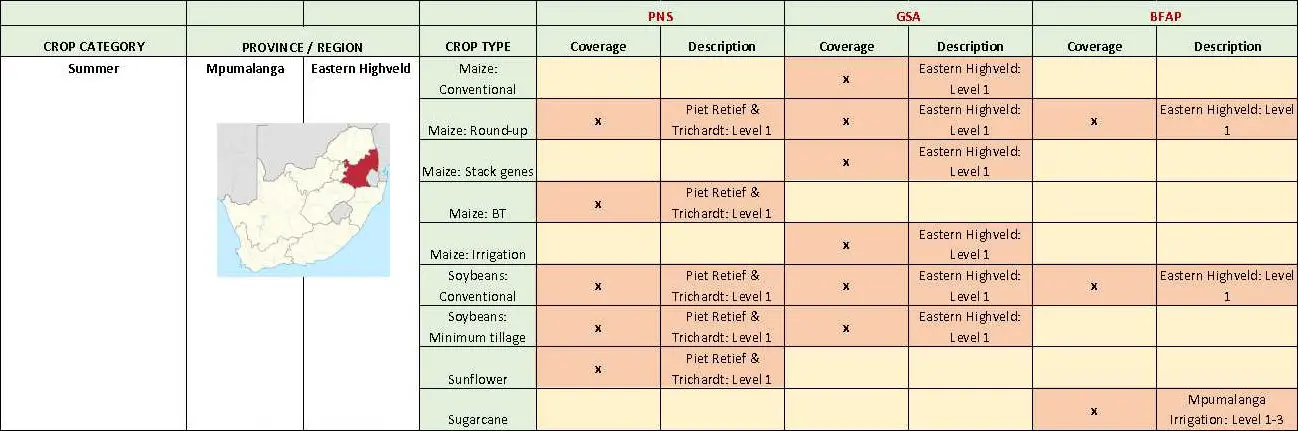
Figure 3: Eastern Free State 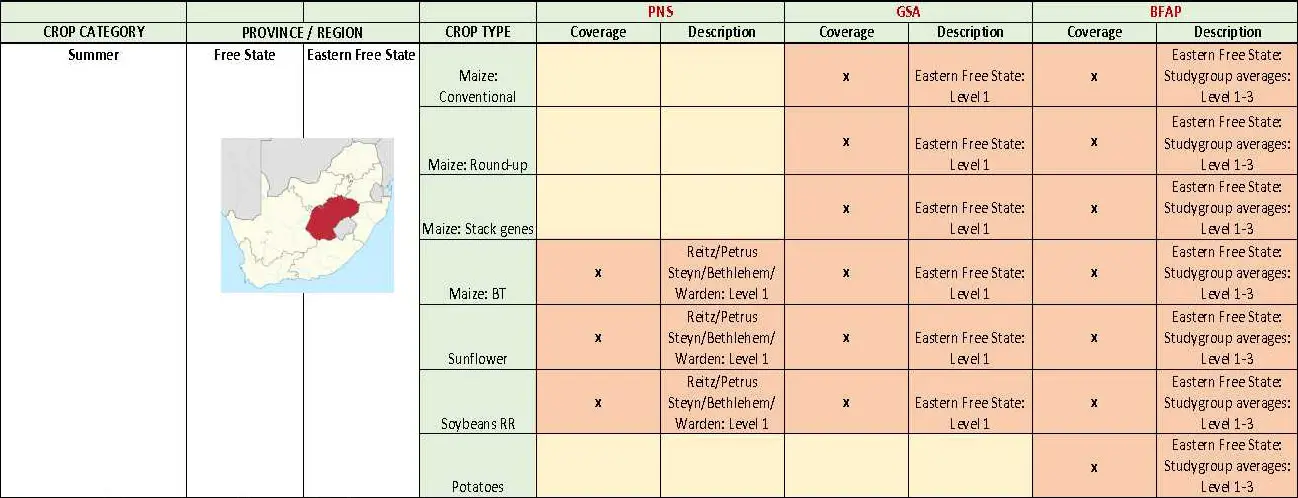
Figure 4: Northern and Western Free State 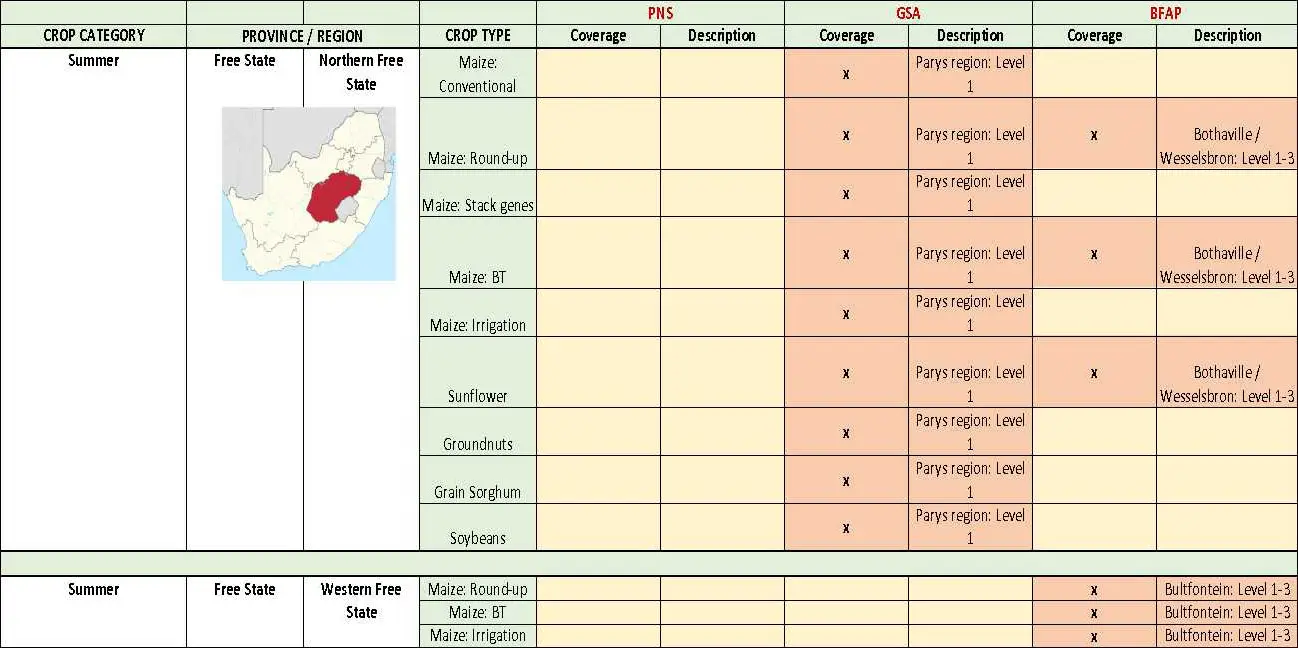
Figure 5: North West 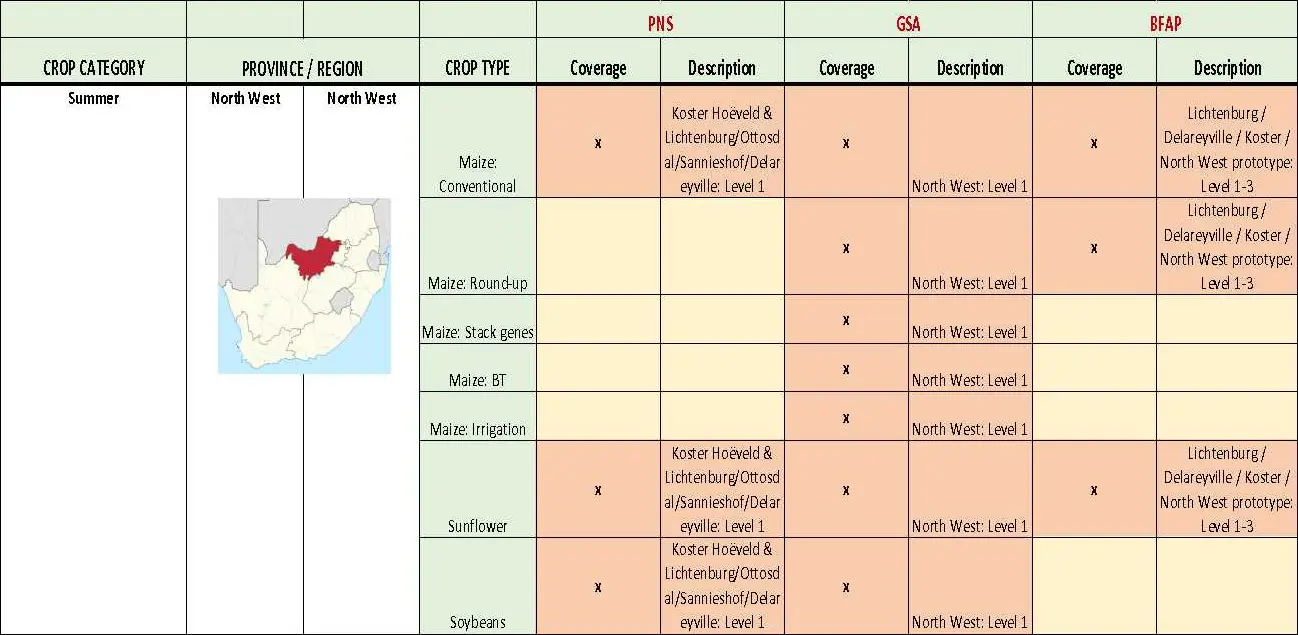
Figure 6: KwaZulu-Natal 
Figure 7: Summer irrigation - Northern Cape, Brits, Limpopo and Bergville 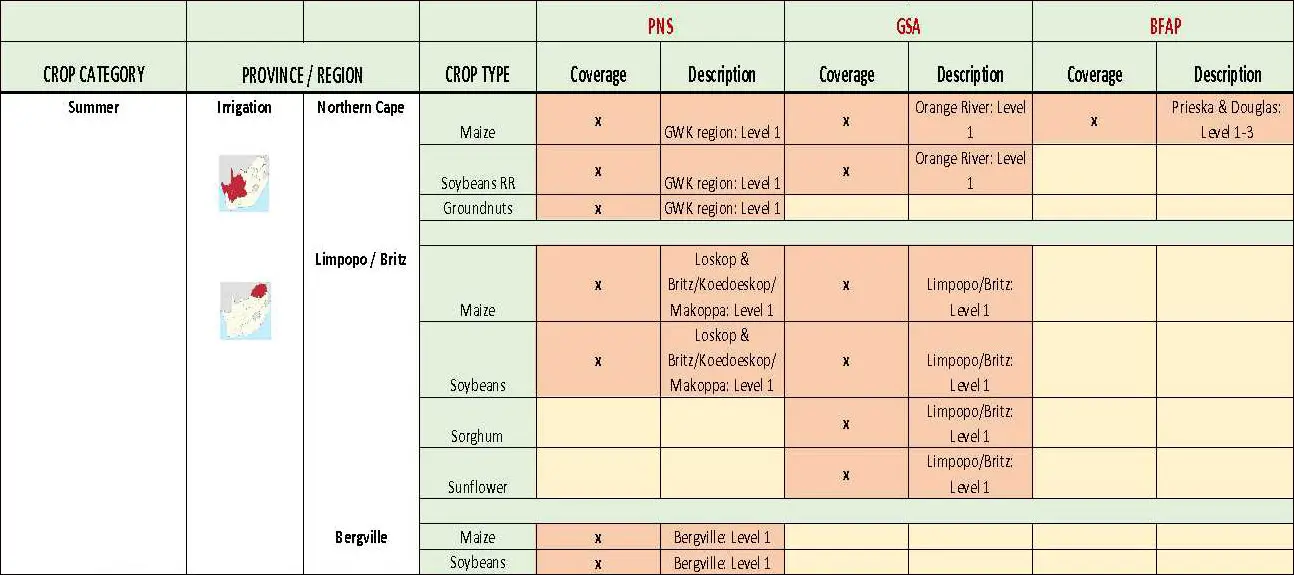
Figure 8: Winter irrigation - Northern Cape, Brits, Limpopo and Bergville 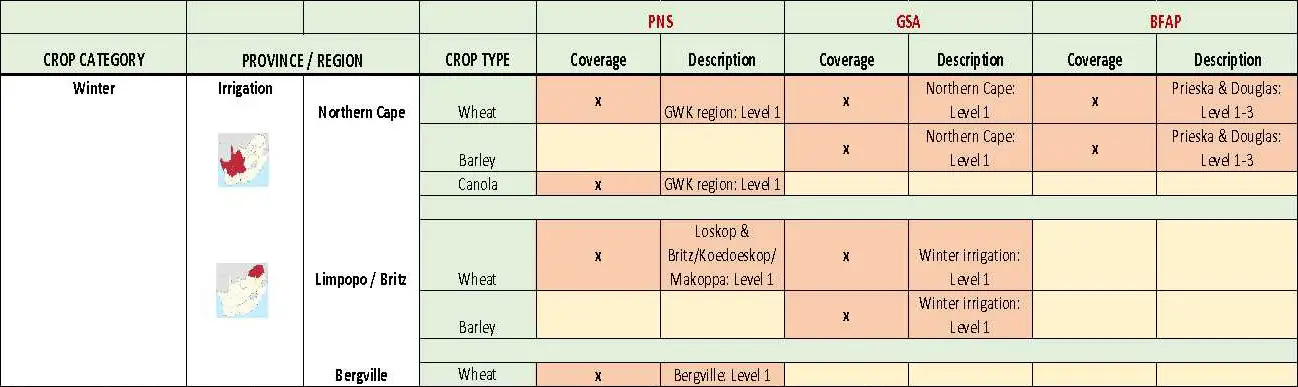
Figure 9: Free State - Winter 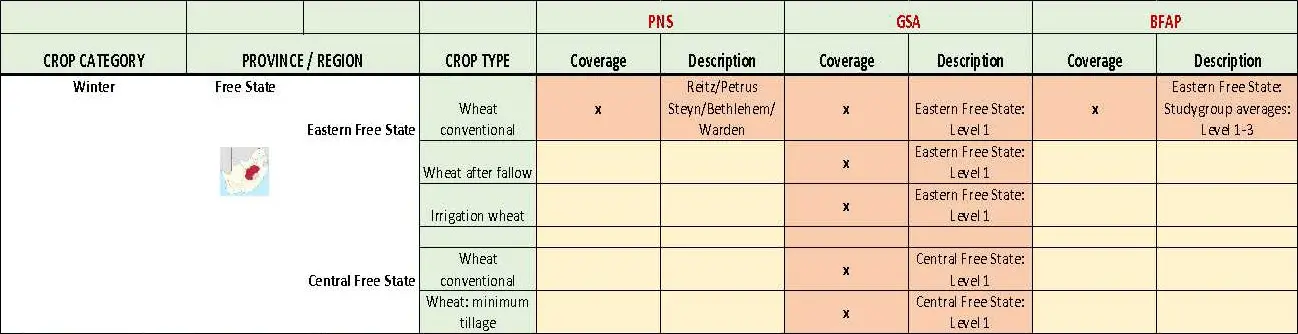
Figure 10: Southern Cape - Winter 
Figure 11: Western Cape - Winter 
-
Data-Intensive Farm Management (DIFM) project in South Africa
Introduction
The latest season (2023/24) has just been concluded in the summer region featuring 3x Soybean trials and 6x Maize trials on 5 farms, these farmers have been cooperating with this project since 2019.
In addition, 3 farms in the Western Cape (winter production region) have been cooperating with this project since 2022, featuring 3x wheat and 1x canola trial fields in 2023 and 4x wheat and 3x canola that have been planted across the Southern Cape and Swartland production regions (to be harvested towards the end of the 2024 calendar year).
Figure 1: DIFM trial locations 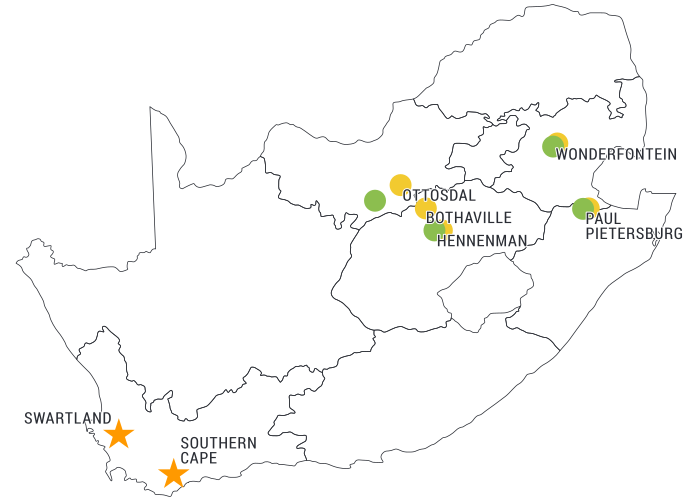
Progress Summary
Most trial data for the summer production region has been gathered however data processing and cleaning has not commenced yet. The online platform developed by the DIFM US project is to be used to process the majority of trial data and some final errors are being solved (related to metric vs imperial unit conversions). Indicative timelines were that data processing could commence from mid-August onwards.
Figure 2: Schweizer-Reneke, soybean harvest map 2024 
The soybean trial near Schweizer-Reneke in the North West province was a failure: due to the prolonged dry and hot weather conditions (mid-January to end of March), the yields were mostly below 680kg/ha, which the harvester failed to record. Given the sparsity of the harvest data (illustrated in Figure 2), the trial data cannot be meaningfully processed and analysed.
All other 2024 summer season trials were performed successfully, and results will be included in forthcoming reports.
Mostly, the soybean trials focus on seeding rate treatments with only one farmer adding fertilizer variations to the trial.
Table 1 presents a summary of the soybean trials performed in collaboration with the farmers during the 2024 season. The research team anticipates results to be quite informative in a dryer than usual season (as opposed to relatively wet seasons in the past years).
Table 1: Summary of soybean trials 2023/24 Province Production region Planting date Seeding rate (plants per ha) Fertiliser rate (kg/ha) Status quo Variation applied Status quo Variation applied North West¹ Schweizer-Reneke 29/11/2023 300 000 200 000-450 000 NA NA Free State Hennenman 11/11/2023 300 000 150 000-450 000 Urea: 0
Superphosphate: 1200-100
0-200Mpumalanga Wonderfontein 03/11/2023 280 000 200 000-400 000 NA NA The maize trials planted and harvested for the 2023/24 season are presented in Table 2. The weather conditions were variable across the country with the Western parts experiencing severe drought conditions and the Eastern parts of the summer production area receiving more rain than in other parts of the country. Harvesting for all trials was completed but trial data processing and analytics will be only included in forthcoming progress reports.
Table 2: Summary of maize trials 2023/24 Province Production region Planting date Seeding rate (plants per ha) Fertiliser rate (kg/ha) Status quo Variation applied Status quo Variation applied KwaZulu-Natal Paulpietersburg 24/10/2023 65 000 55 000-82 000 Cultivar varied 5 cultivars used KwaZulu-Natal Paulpietersburg 04/11/2023 65 000 55 000-82 000 NPK: 250 100-350 Free State Hennenman 08/11/2023 22 000 10 000-50 000 Urea: 200 90-310 Free State Bothaville 14/12/2023 25 000 10 000-50 000 Urea: 200 90-310 Mpumalanga Wonderfontein 25/10/2023 52 000 42 000-70 000 NPK: 265 190-350 North West Ottosdal 21/12/2023 23 000 20 000-30 000 NPK: 220 150-275 Table 3 presents the canola trial that was harvested in 2023 as well as the new plantings for 2024. Unfortunately, excessive rain and waterlogging prevented the farmer to apply variable rate fertilizer and the trial was deemed a failure. The 2024 season has had a slow start in the Western Cape with overwhelming rainfall since throughout July. A second variable topdress fertilizer is being applied in early August.
Table 3: Summary of canola trial results 2023 and plantings 2024 Province Production region Planting date Seeding rate (plants per ha) Fertiliser rate (kg/ha) Status quo Variation applied Status quo Variation applied Western Cape² Southern Cape 04/2023 NA NA Urea: 80 22-102 Western Cape Southern Cape 04/2024 NA NA Urea: 80 22-200, with timing differences Western Cape Swartland 23/04/2024 2 1-3 N: 80 0-150, with timing differences Western Cape Swartland 22/04/2024 2 1-3 N: 80 0-150, with timing differences 3x Wheat trials were successfully performed in 2023. The Southern Cape trial is cut into windrows and harvested in a different direction from planting. This implies a need for the trial to be designed in a hexagonal pattern to maximise the amount of clean data that is extracted from it. As a result, however, the amount of observations are a lot less than in the conventional DIFM trial design. Therefore, management zone analyses could not be run for this field yet. By increasing the seeding rate from 68kg/ha up to 96kg/ha, additional profit of R2093/ha can be generated in a season with similar climatic conditions. By increasing the fertiliser rate from 80kg/ha up to 250kg/ha, R8550/ha additional profit could be generated for wheat in a similar season as experienced in 2023.
Both trials in the Swartland region indicated that both yield and profits could have been increased with a higher seeding rate (100kg/ha, maximum treatment) and lower fertiliser rates (75kg/ha, minimum treatment). This finding is perhaps contrary to expectation and typical agronomic recommendations and might also be a function of the rotation system applied on the farm in question (1 year of wheat followed by 2 years' medics). When defining management zones within the field, there seems to have been one zone that has implied a different recommendation: lower seeding (50kg/ha) rate with low fertilisation (100kg/ha).
As mentioned for canola above, the winter production season had a slow start with late onset of rain, followed by an extremely wet July. A second variable top dressing will be applied for the wheat trials in the Swartland as well.
Table 4: Summary of wheat trial results 2023 and plantings 2024 Province Production region Planting date Seeding rate (plants per ha) Fertiliser rate (kg/ha) Status quo Variation applied Status quo Variation applied Western Cape Southern Cape 04/2023 60 50-125 Urea: 80 22-122 Western Cape Swartland 04/05/2023 65 50-100 Chicken manure: 150 75-200 Western Cape Swartland 03/05/2023 65 50-100 Chicken manure: 150 75-200 Western Cape Southern Cape 04/2024 NA NA Urea: 80 22-200, with timing differences Western Cape Swartland 05/05/2024 65 50-100 Chicken manure: 150 75-200 Western Cape Swartland 05/05/2024 65 50-100 Chicken manure: 150 75-200 Western Cape Swartland 02/05/2024 100 50-150 N: 80 0-150, with timing differences Timeframe for the project: 2023-2025
Table 1 represents the proposed timeline for project deliverables.
Table 5: Proposed Project Timeline (Activities for each year: 2022/2023-2024/2025) Activity Action Region Sep-Oct Nov-Dec Jan-Feb Mar-Apr May-Jun Jul-Aug Activity 1: Setting up of field trials University of Illinois & SA Summer Winter Activity 2: Planting of field trials SA team Summer Winter Activity 3: In-season monitoring SA team Summer Winter Activity 4: Capturing and processing of yield data University of Illinois & SA team Summer Winter Activity 5: Developing and compiling Research SA team Summer Winter Activity 6: Reporting to farmers and clients SA team Summer Winter -
Establishing the climatic factors for maximum canola yield (genetic yield potential) and modelling canola yield and spatial suitability under present and future climate conditions in the Western Cape
Progress is reported here for 2023, the first official year of the research project. However, project preparation and student enrolment were begun in 2022, and this report covers both years.
The PhD Agric student, Mr AA le Roux, successfully developed and presented his project proposal to Stellenbosch University and the Western Cape Department of Agriculture Research Project Committee. The project is now formally registered at both institutions.
A systematic literature review on the effects of climate change on canola growth, phenology, production and oilseed yield was conducted. A draft review article was written for submission to an international peer-reviewed journal in 2023.
The phytotron at Stellenbosch University was prepared for the first controlled environment canola pot trial. Systems for irrigation/fertigation, lighting and automated climate and soil water content monitoring were installed. The first trial was initiated in July 2023, studying six cultivars representing three cultivar types and two growing season lengths. Constant factors are day/night light regime and current temperature regime at Langgewens Research Farm, and current atmospheric CO2 concentration.
Langgewens canola trial production and weather data for 2011-2022 were collected and sorted, ready for statistical analysis.
Mr le Roux attended an online course on "Introduction to APSIM" (Agricultural Production Systems Simulator Model) which he will use for the crop-climate modelling.
Outputs included one poster presentation at a national scientific conference, two oral presentations at industry days, and participation in a panel discussion at a climate change and agriculture youth convention. One media article showcased the project and student.
-
Is additional Nitrogen beneficial to soybeans (glycine max. L) in different agro-ecologies of the Eastern Highveld?
Problem description
Soybeans are commonly known for their ability to fix nitrogen, and this results in the application of nitrogen fertilizer being relatively small in this summer grain crop compared to other non-leguminous grain crops. One of many other reasons for small amounts of inorganic nitrogen being applied in soybeans is the negative effect it arguably has on biological nitrogen fixation. However, it remains an essential nutrient element because it plays two essential roles in plants.
Firstly, it is an essential constituent of reserve proteins and secondly, it is part of the enzymatic systems responsible for the growth and development of plants. Therefore, it is highly essential to ensure nitrogen levels are always sufficient in crop production.
Even though minimal nitrogen is applied in soybeans, most producers still apply supplemental nitrogen with the aim of obtaining higher yields of great quality (high protein and oil content). However, the rate at which they apply this nitrogen is either too high, too low, or unnecessary (in situations where the obtained yield is comparatively high without any nitrogen application). This research project seeks to test the effectiveness of various levels of nitrogen application and eventually determine the optimum level that will effectively enhance the growth, yield and quality of the crop while ensuring a substantial return on investment.
Aim and methodology
The aim is to test effectiveness of various levels of nitrogen application on the growth, yield and quality of soybeans in different agro-ecologies and to statistically identify the optimum level of nitrogen application that will enhance the amount and quality of production. This is carried out by planting field trials at various locations using complete randomised block design plots with four replicates per treatment. The treatments are 0 (Control), 10, 20, 30 and 40 kg N/ha. The fertiliser is band placed 5cm below and 5cm away from the seeds. This application takes place before the plant enters peak nitrogen demands, at grain filling (R3).
Soil samples are collected for analysis prior to planting and after harvesting; among other measurements obtained from their analysis, they are also taken to measure the nitrogen status of the soil. The trials are monitored weekly and raw data is collected from emergence to harvest. The effect of nitrogen on nodulation will be monitored from the time of administration until maturity. The primary parameters that will be measured are growth-related parameters of the plant, the yield, yield components, as well as protein and oil content.
Motivation
This research project is a very important 'farm level' trial that will assist farmers in taking sound decisions that will help them realize substantial returns on investment. It constitutes a best management practice trial to ensure high yields with higher protein and oil contents are obtained by altering controllable aspects in soybean production. It is also highly significant to agronomists and other crop related research scientists and consultants, particularly when making recommendations to farmers.
Farmers also need this information because optimum levels of nitrogen application remain questionable. The importance of the project to dryland producers is significantly high because of the adverse climatic conditions, a large variety of soil types and everchanging rainfall patterns in summer rainfall regions. Outcomes from this project will assist in the mitigation of risks and taking informed decisions.
The area estimates and first production forecast of summer field crops shows that soybeans will be planted on a total of 915 300 ha for the 2022 production year, which is an increment of more than 10% from the 2021 production year. This simply means more and more farmers in the summer rainfall regions are expanding their soybean production.
Possibility of technology transfer and application
The results obtained from the project will be published by a registered institution as a master's degree thesis. They will further be provided to various industry stakeholders and role players, voluntarily and upon request. They will also be presented at farmer's days and/or conferences.
Does your institution have the necessary infrastructure and resources?
The institution does have the necessary infrastructure and resources to ensure that this research project is executed the best way possible. In cases where extra equipment or external evaluations and analysis are required then the researcher will make use of Agricultural Research Council (ARC) facilities as and when required.
Relevance and impact of proposed outcomes
The production of soybeans in South Africa at large is increasing, particularly now that fertilizer costs have tremendously increased. The total area planted increased from 705 000 ha in 2020 to 827 100 ha in 2021, which is a 17,3% increase. The expansion comes with a strong desire to achieve high yields using minimal nitrogen fertilizer. The outcome of the project will be very helpful to farmers because the amount of money they save from applying enough nitrogen will give enough returns compared to applying a lot of nitrogen and still obtaining the same yield.
Chances for success
The chances for success are very high because the trials will be planted at three different locations, and this will ensure that should any of the trials at a specific location face any environmental challenges then there are two more trials still active. The treatments will be replicated four times; this also minimizes the risk of failure.
Added to that, the trials are planted on lands of commercial farmers and there is a great guarantee that they will produce every season. The necessary equipment: implements, planters, sprayers, tractors, and combines are available, highly maintained and kept in sound conditions. Furthermore, my advisory committee is very experienced and has good credentials. My supervisors, Dr GM Ceronio and Dr E van der Watt (University of the Free State) have more than 20 years of research experience in agronomy and plant physiology respectively.
Mr JGT Prinsloo who is a farmer, agriculturalist and mentor contribute a great deal of support and knowledge towards planting, monitoring, harvesting, and interpreting different laboratory analyses, thus ensuring the project becomes successful. My colleague, Mr R Senekal is very supportive and always available for data collection and making remarks. VKB Landbou, particularly the agricultural management department is also playing an important role in ensuring this project becomes successful.
Economic justification
Fertilizer is relatively expensive, and it is not financially viable to spend a lot of money on large quantities of nitrogen fertilizer, and to also apply it in high quantities but not really make a good return from it. Regardless of whether supplemental nitrogen application is too high or not, the costs involved need to be evaluated and sound decisions should be taken to ensure that the money spent on fertilizer secures higher yields. Fertilizer prices have been increasing by more than 5% year on year. After the Russia Ukraine War, they increased even more and this is becoming a problem for most South African farmers, particularly those producing under dryland conditions. For example, Greensulf 35 retail price on the 3rd of March was R11 825.00/ton and on the 14th of March the cost price was R12 978.00/ton, this is a 9.7% increase within a period of days. This shows how expensive fertilizer has become.
This project seeks to help farmers use their fertilizer wisely and save substantial amounts of money on fertilizer.
-
Canola (Brassica napus L.) plant population and cultivar effects on weeds in the Western Cape, South Africa
Problem description
Canola growth, yield components and final yield are all directly affected by the plant population. Overall, optimal canola plant populations of 60 to 70 plants m-2 have been recommended for the hybrid cultivars in Europe (Rathke et al. 2006), while the standard plant populations for China is roughly 30 plants m-2. Optimal canola plant populations for dry climates such as South Africa and Australia are recommended to be in the range of 40 to 80 plants m-2 (Canola Council of Canada, 2011; PRF, 2018). As plant populations decrease, there are fewer plants per unit area which then compensates by increasing productivity of each plant as a result of higher leaf area index, more branching and a higher number of pods per individual plant (Leach et al. 1999). Due to canola compensating to lower plant populations and less intra-row competition, producers have the flexibility to decrease seeding rates to reduce input costs, while still achieving maximum yields.
There have been unofficial reports (so-as low as five plants m-2, which yielded similar yields to called "farmer trials") in the Southern Cape of Canola plant population within the recommended range. Five plants m-2 is, however, a high-risk approach, particularly as yield might be limited by insufficient yield components in years with good rainfall. However, successes of such low plant populations point to the possibility of reducing seeding rates significantly and subsequently lead savings in seed cost, and therefore increased profitability. Preliminary results from a current study by Prof Pieter Swanepoel and Rory Blok in the Western Cape shows that plant populations can be reduced to as low as 10 plants per m-2, without significant yield reductions. The premise for reducing seeding rates is based on seed costs. Canola seed costs are a substantial amount of cost to producers. The input cost associated with growing canola has seen a major push for better knowledge on optimal plant population for all the new canola varieties that are currently available on the market to date.
Due to the high canola seed prices, considerable research and development investments on investigating the correct plant populations for specific varieties across different climatic zones has been done. By reducing the plant populations, intraspecific plant competition is minimised resulting in reduced seed costs and potentially sustain or improve the current seed yields farmers are obtaining.
However, contrary to reducing seeding rates, the chances of weed problems increase. Effective weed control globally and also in South Africa have been hampered by reduced efficacy of chemical weed control methods (Tharayil-Santhakumar 2003). This is due to the increasing occurrence of herbicide resistant weeds that cannot be controlled effectively by means of the normal selective herbicides registered on crops (Heap 2021). Lolium spp. and Raphanus raphanistrum are of particular concern in Canola in the Western Cape.
Higher seeding rates, in combination with a competitive cultivar and early weed control can lead to better weed suppression (Harker et al. 2003). Cultivar selection for high yields and weed suppression might be an important strategy in integrated weed management (IWM) (Mwendwa et al. 2020). Cultivars that grow vigorously early in the season will suppress weed establishment and survival (Lemerle et al. 2014).
Lemerle et al. (2014) reported that triazine tolerant (TT) cultivars were least suppressive due to lower biomass production compared to other herbicide tolerant groups. The lower biomass production and less weed suppression by TT cultivars are a common observation in the Western Cape. Studies in Australia by Lemerle et al. (2016) also proved that different cultivars differed in the ability to suppress ryegrass and volunteer wheat in canola crops.
The lack of efficient weed control by means of herbicides necessitated the implementation of IWM systems. Amongst others control methods included in IWM are higher seeding rates and cultivar choice. In some cases, higher seeding rates contributed to better weed control and higher yields (Harker et al. 2003, Lemerle et al. 2011, Asaduzzaman et al. 2020). Lemerle et al. (2016) however found no significant effect of seeding rate on weed suppression in canola. Lower seeding rates however resulted in significantly higher weed seed production that will lead to major future problems.
Pieterse (2015) also found that seeding density of canola had a very small, however significant effect on the dry matter production of weeds 90 days after sowing in 2012 but none at harvest, as well as no effect on yield at both Langgewens and Roodebloem. In 2013 canola seeding density had no effect on weed dry matter production at 90 days after planting but did have a positive effect on canola yield. The influence of cultivar choice in combination with seeding density was not investigated at that stage.
It appears therefore that the combination of seeding rate and cultivar choice will influence weed populations. Locality and climate will influence these interactions and site specific research is needed to develop strategies to reduce weed populations in canola crops. Although the trend is for better weed control with higher seeding rates and cultivar choice, it needs to be tested under local conditions. With the high incidence of herbicide resistant ryegrass and wild radish in the canola cropping areas, all tactics that could add to effective IWM should be investigated.
Aim (measurable and coupled to time schedule)
The aim of this study is to evaluate weed pressure in canola as affected by canola plant population, and cultivar choice through evaluating:
- Weed abundance, weed composition, and weed seed production (2023 and 2024);
- Canola growth, development, yield and seed quality (2023 and 2024); and
- To disseminate information to producers and advisors (2024 and 2025).
The Gantt chart below shows the time schedule for 2023 (first season planting 2023 already planted); 2024 (second season planting); 2025 only dissemination.
Fieldwork activity J F M A M J J A S O N D 2023 and 2024 SOILS AND FERTILISATION Soil sampling and analysis X X Prepare soil/experimental area for seeding X X Fertiliser applications X X CROP MANAGEMENT Plant crops (take climate in consideration) X X Monitor and control weeds, diseases, pests X X X X X X Plant population determination X X Hand thinning X X Canola Biomass determination X X X X X Weed abundance, composition determination X X X X Harvest crops X Yield and quality determination X X Climatic data X X X X X X X X X X X X Dissemination of information Mar Aug Mar Aug Sep 2024 2025 Farmers day X X X X X Popular article X X Scientific article X Radio talk X X Congress contribution: Poster X Congress contribution: Paper X Motivation
- The development of herbicide resistant weeds makes chemical weed control in canola increasingly difficult;
- While there are still effective chemical control options available, this needs to be augmented by sound integrated weed management systems to keep them sustainable;
- Investigating the interaction between cultivar choice and plant population to evaluate weed suppression success without compromising canola yield can result in developing effective management strategies to reduce weed competition in canola;
- Canola is an expensive crop to grow but new varieties with high seedling vigour and increased plant competition could help reduce plant populations, thereby reducing seed costs while maintaining or improving yields; and
- Determining the agronomic and economic benefits of reducing plant populations will inform growers whether it is an option to consider.
Possibility of technology transfer and application
Results will be communicated on annual national conferences and field walk-and-talks (informal practical days). Findings will be popularised in the farmers' magazines (for example Landbouweekblad, Farmer's Weekly etc) ad also extended to farmers through farmer's days annually in various regions (e.g. Annual Research Farm Information Days: "Voorsaaidae" etc.)
Addressing market demands
Weed management has become an increasingly important aspect of crop production because of the difficulty of controlling weeds in crops, and canola is no exception. Apart from the environmental pollution that herbicides may cause, there is a growing public opposition to many herbicides. The development of herbicide resistant weeds exacerbates the problem further. The development of alternative, environmentally friendly weed management systems is therefore important to address both these problems. Chemical control of weeds should be scaled down and at the same time augmented with IWM systems to decrease environmental pollution and to keep crop production viable and sustainable.
These IWM tactics can help to improve and sustain yield across the canola value chains, this allows production to increase and create a market demand. Increased canola production will result in more products being developed from canola. Since 2015, there has been an increase in consumption and that is higher than the supply, thereby creating a net market demand for the product.
Does your institution have the necessary infrastructure and resources?
Stellenbosch University is equipped with infrastructure, equipment, and a technical team to carry out this research.
Stellenbosch University is also equipped to receive and administer any funds awarded to this project. The University has offices and divisions specifically responsible for different levels of project management and financial oversight. This includes a research contract office, with project accountancy and legal services, an intellectual property office, a technology transfer centre, and a Finance Division responsible for the wide range of financial activities expected of a research-intensive higher education institution. Within the office and the Finance Division care is taken that the financial management complies with both institutional, national and funder rules and regulations. Finances of projects at the University are managed through cost centres created for specific projects.
Relevance and impact of proposed outcomes
This study will improve the understanding of how these specific IWM tactics can contribute to effective weed management in canola across different productions zones in the Western Cape. The challenge for producers and the canola industry over the next few years will be to continue to improve production and effectively control weeds to warrant supply of high-quality oils for domestic use. Understanding sustainable weed management systems in canola is important to increase canola growing confidence.
Chances for success
Similar IWM trials on canola as well as other crops have been conducted in Australia and this can be used as a basis to plan these trials. In addition, a similar type of trial (only on sowing density) was carried out by Dr PJ Pieterse from 2012 to 2014 but due to some technical problems, the results were not very clear. The report of that project can also be consulted to prevent similar problems from happening during this trial. This research is proactive and this agronomic practice needs to be investigated to make canola a successful commodity in the South African farming landscape of the future.
Extent of back-up (continuity)
A team of experts involving experienced scientists and technicians provides a good backup and memory of the e project's business plan to continue with the project in case any of the team members not being able to continue.
Economic justification
Financial analyses done on the competitiveness of different crops grown in the Western Cape showed that small increases in canola yield may have a large impact on profit margins of canola. Higher profit margins will help to convince farmers to plant more canola. Increased farming efficiency because of refined management operations (precision farming: plant population, cultivar choice) should lead to increased profitability when the results are applied on farms.
Annual savings from the lower canola seed costs will become clear from this study.
-
PRF website
2023/2024 was uneventful regarding major updates to services and programming languages that form the basis of the website framework. Consequently, the focus during 2023/2024 was primarily to update existing page content and add new website content. On 29 February 2024 the Protein Research Foundation website hosted a total of 1,399 static pages. This number excludes dynamically created pages, such as the Research Database section.
Google analytics 4
As mentioned in last year's report, Google's Universal Analytics (UA) stopped processing data on 1 July 2023. It was replaced with Google's next generation Analytics 4 (or GA4 for short). Google Analytics collects visitor data from websites and apps and returns this information by means of graphs, which makes it easier to understand visitors' journeys.
The changeover was relatively smooth, owing to the fact that the PRF's new GA4 property has been running alongside the existing UA property since December 2022.
ICB Calculator App
Unable to determine an accurate figure for the number of times the online ICB App was launched. Google Play Store statistics show approximately 11 active installations. The number of downloads the desktop received cannot be calculated at this stage.
Website visitor statistics Reporting Year Unique Visitors Raw values Google values Visitors Pages Pages per visit 2004 1 691 2005 3 285 2006 4 552 2007 5 404 3 041 10 838 2.79 2008 11 104 5 274 18 829 2.82 2009 10 194 6 610 27 341 3.18 2010 11 812 6 054 23 347 2.98 2011 12 357 5 511 24 258 3.29 2012 16 306 6 909 28 206 3.12 2013 54 739 8 767 34 284 2.97 2014 54 590 10 189 39 363 3.03 2015 35 653 12 519 45 078 3.60 2016 31 674 8 733 53 811 4.47 2017 49 417 6 901 20 514 2.18 2018 38 049 10 041 24 873 1.90 2019 45 787 10 444 23 628 1.78 2020 27 317 9 632 24 169 1.93 2021 25 905 12 096 24 176 1.66 2022 29 278 13 074 22 570 1.52 2023 43 805 10 096** ± 18 000** ± 1.78** NOTE**: It is unclear if the new Google Analytics 4 system had an impact on the results.
Google values show a decrease in page views and a decrease in active visitors. Visitors decreased by approximately 3000 and Page views increased by approximately 104 for the period: 1 March 2023 to 29 February 2024. The most page views came from the following pages in order of percentage share:
Figure based on User engagement > Page Title
- Home page:Most amount of views
- Bursary Requirements
- Bursary Application Form
- Soy Oilcake Price Average: Longest engagement time
- ICB Calculator App
YouTube visitor statistics Reporting Year YouTube statistics Views Watch time (hours) Subscriber gain 2014 611 28 +2 2015 1 900 74 +4 2016 8 400 256 +21 2017 23 000 568 +78 2018 35 000 716 +195 2019 27 900 660 +151 2020 27 600 670 +163 2021 19 400 570 +161 2022 29 200 916 +247 2023 6 200 188.6 +37 LIFETIME ± 163 100 ± 4 200 hours +916 The Protein Research Foundation's YouTube channel has grown to almost 916 subscribers by the end of 29 Feb 2024.
The most watched videos:
- Soybean Cultivation: 01 Introduction – Wessel van Wyk: ± 3,301 views
- Soybean Cultivation: Full Video 54 minutes – Wessel van Wyk: ± 498 Views
REPORTS RESEARCH REPORTS 2023/2024 2023 PROJECTS FINANCED